


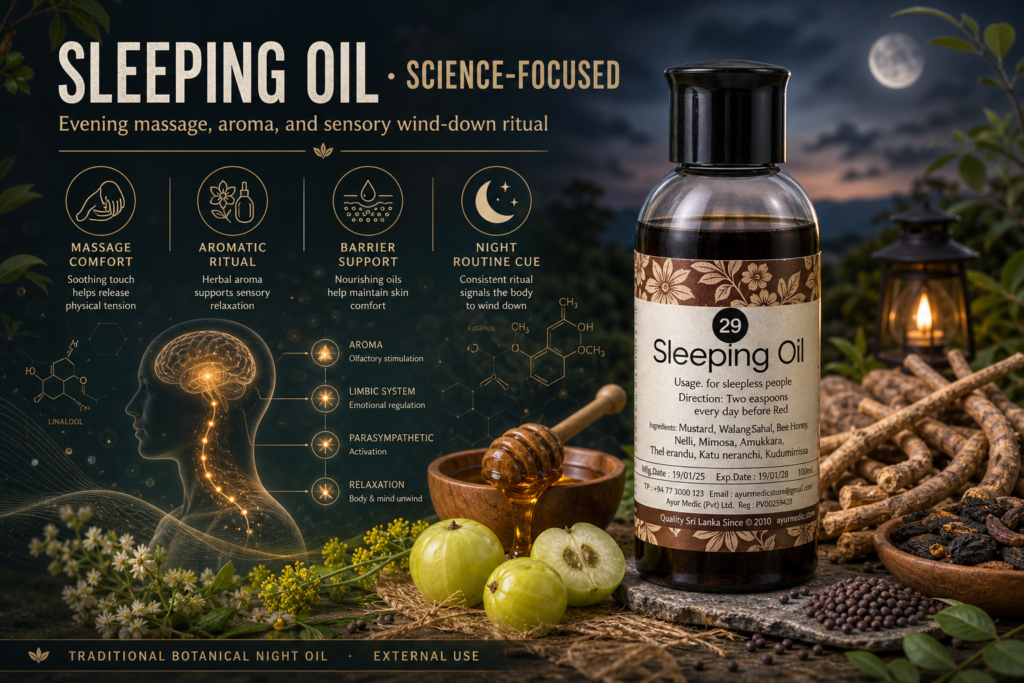
Algunos aceites están diseñados para hacer bien una sola cosa: ralentizar la noche. El aceite para dormir tiene mucho sentido precisamente por eso. En lugar de actuar como una cura para el insomnio, funciona mejor como un aceite de masaje para uso nocturno Su objetivo era convertir la última parte del día en algo más tranquilo, silencioso y reflexivo.
El verdadero valor de un producto como este no suele ser que “haga dormir a alguien” de una manera similar a la de una droga, sino que ayuda a crear el tipo de ritmo a la hora de dormir Muchas personas echan de menos: aceite tibio sobre la piel, unos minutos de masaje pausado, un aroma familiar y un hábito repetitivo que le indica al cuerpo que el día está terminando.
1) Por qué un aceite nocturno aún puede tener sentido
Las investigaciones modernas sobre rituales del sueño, masajes y aromaterapia no son del todo uniformes, pero apuntan en una dirección útil: El tacto, la repetición y la relajación sensorial pueden ser importantes.. Esa es la mejor manera de entender el aceite para dormir. Su propósito no es abrumar al cuerpo, sino facilitar una transición más suave hacia el descanso.
Utilizado en el cuero cabelludo, las sienes, los hombros, el cuello o el cuerpo, un aceite como este pasa a formar parte de una rutina de relajación. Para mucha gente, eso por sí solo ya es significativo. Un producto no necesita hacer afirmaciones espectaculares para ser realmente útil.
2) Lo que sugiere la lista de ingredientes
La fórmula incluye Mostaza, Walanga Sahal, Miel de Abeja, Nelli, Mimosa, Amukkara, Thel erandu, Katu neranchi y Kudumirrissa. Algunos de esos nombres pueden interpretarse con bastante certeza, mientras que otros se acercan más al mundo de la nomenclatura tradicional local y lo ideal sería compararlos con los registros botánicos exactos del proveedor.
Aun así, el carácter general de la fórmula no es difícil de leer. Parece un aceite construido alrededor de Calidez, deslizamiento, comodidad y una sensación sensorial más arraigada en la piel..
- Mostaza Encaja con el aspecto cálido de la fórmula y ayuda a explicar por qué el aceite puede sentirse más activo que un aceite base neutro.
- miel de abeja Contribuye a la identidad tradicional de la mezcla, orientada al confort, y tiene sentido en una fórmula diseñada para brindar una sensación relajante en lugar de una sensación clínica.
- Nelli, que probablemente corresponde al amla, aporta al aceite una dimensión herbal y tónica más clásica.
- amukkara, El nombre regional conocido de la ashwagandha refuerza la identidad calmante y reparadora de la fórmula, aunque la evidencia moderna más sólida sobre los efectos de la ashwagandha en el sueño proviene del uso oral en lugar del uso tópico.
- Thel erandu, Probablemente, la presencia de aceite de ricino ayuda a explicar la sensación más densa, lenta y envolvente que se espera de un aceite para masajes nocturnos.
3) Donde la honestidad importa
No todos los nombres de ingredientes locales deben traducirse con demasiada confianza. Nombres como Walanga Sahal, katu neranchi, y Kudumirrissa Es probable que se trate de ingredientes botánicos tradicionales reconocibles, pero aún así merecen una confirmación exacta antes de que alguien empiece a hacer afirmaciones muy específicas sobre cada ingrediente.
Ese tipo de cautela no debilita la fórmula. Simplemente mantiene el producto basado en lo que se puede afirmar con seguridad y evita forzar certezas donde aún no se han ganado.
4) Lo que este aceite realmente ofrece
En esencia, Sleeping Oil se siente como un producto diseñado para Masaje nocturno, calor en la piel y un ritmo más lento a la hora de acostarse.. Tiene sentido para las personas a las que les gusta el ritual: frotarse un poco el cuero cabelludo, las sienes, los hombros o el cuerpo, y luego dejar que la experiencia sensorial familiar indique que el trabajo ha terminado y que comienza el descanso.
Lo que razonablemente puede ofrecer es apoyo a los hábitos de relajación antes de dormir A través del tacto, la repetición, el aroma y la comodidad. Esa es una historia mucho mejor y más creíble que pretender que el aceite trata directamente los trastornos del sueño.
5) Una forma realista de entenderlo
El aceite para dormir pertenece mucho más naturalmente al mundo de cuidado corporal nocturno tradicional Es más adecuado para alguien que desea que el final del día sea más tranquilo, pausado y menos apresurado que para alguien que busca un sustituto tópico para los medicamentos para dormir.
6) Conclusión
El aceite para dormir funciona mejor como un producto de ritual, no como un producto milagroso. Su valor reside en la experiencia que crea: un deslizamiento más suave, un tacto cálido, un aroma herbal familiar y una pequeña pausa nocturna antes de acostarse. Entendida de esta manera, se siente más auténtica, más útil y mucho más creíble.