

Este es uno de los productos donde la honestidad importa más que el marketing. Los aceites y bálsamos tópicos lo hacen. no eliminar las venas varicosas o revertir la disfunción de las válvulas venosas. Lo que pueden hacer es apoyar la capa de síntomas: sequedad de la piel, molestias locales, sensación de pesadez y el efecto calmante del masaje.
1) Lo que dice primero la atención médica moderna
Para la enfermedad venosa crónica, la compresión sigue siendo una medida fundamental basada en la evidencia. Es importante aclararlo para que este artículo tenga una base sólida. Un ritual tópico puede ser útil, pero no es el tratamiento principal para el problema venoso subyacente.
2) Donde un ritual con aceite y bálsamo verde aún puede ser útil
Un aceite o bálsamo de uso externo puede resultar útil por varias razones:
- El masaje puede mejorar temporalmente la comodidad y reducir la sensación de pesadez.
- Los aceites emolientes pueden mejorar la piel seca, tirante o irritada de las piernas.
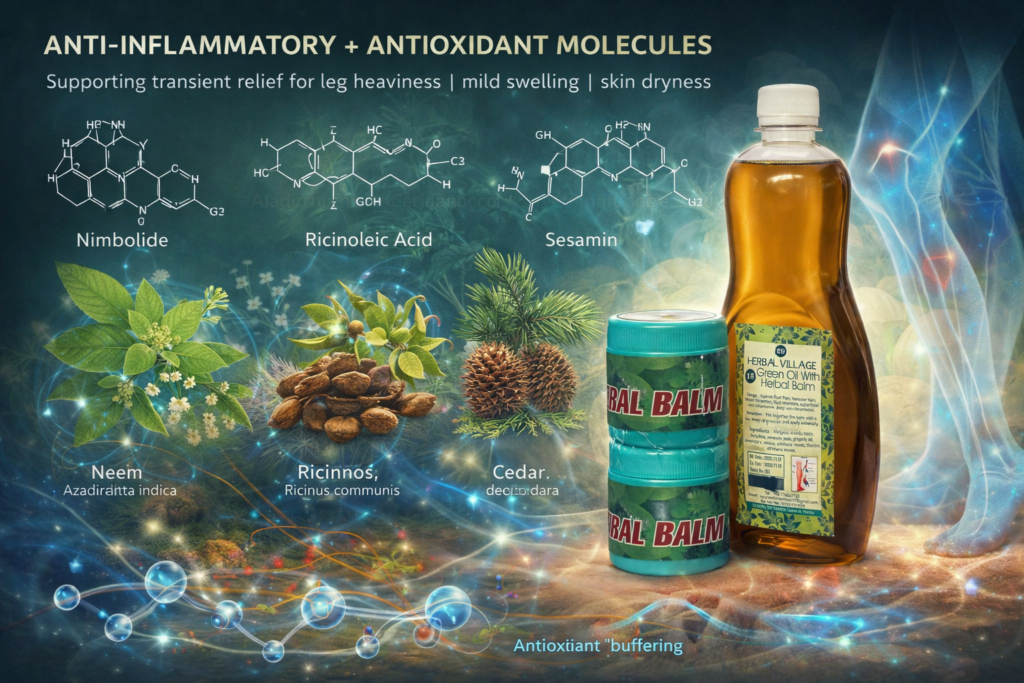
- Los ingredientes botánicos pueden contribuir con efectos antiinflamatorios o sensoriales a nivel superficial.
Se trata de un relato sobre el alivio de los síntomas, no sobre la reparación estructural de las venas.
3) Por qué la precaución es importante en esta fórmula.
Algunos nombres de ingredientes tradicionales en la versión anterior no eran del todo fiables a nivel de especie, y al menos un mapeo relevante para la seguridad generó dudas. Por lo tanto, el artículo debe evitar afirmaciones moleculares excesivamente detalladas cuando la identidad de los ingredientes aún es parcialmente incierta.
4) Conclusión
El planteamiento más creíble es simple: esto es un Ritual tradicional de masaje y cuidado corporal Para mayor comodidad en las piernas y soporte de la piel, debe usarse con expectativas realistas. No promete la eliminación de las venas, la reversión de las varices ni resultados de tratamientos médicos.