


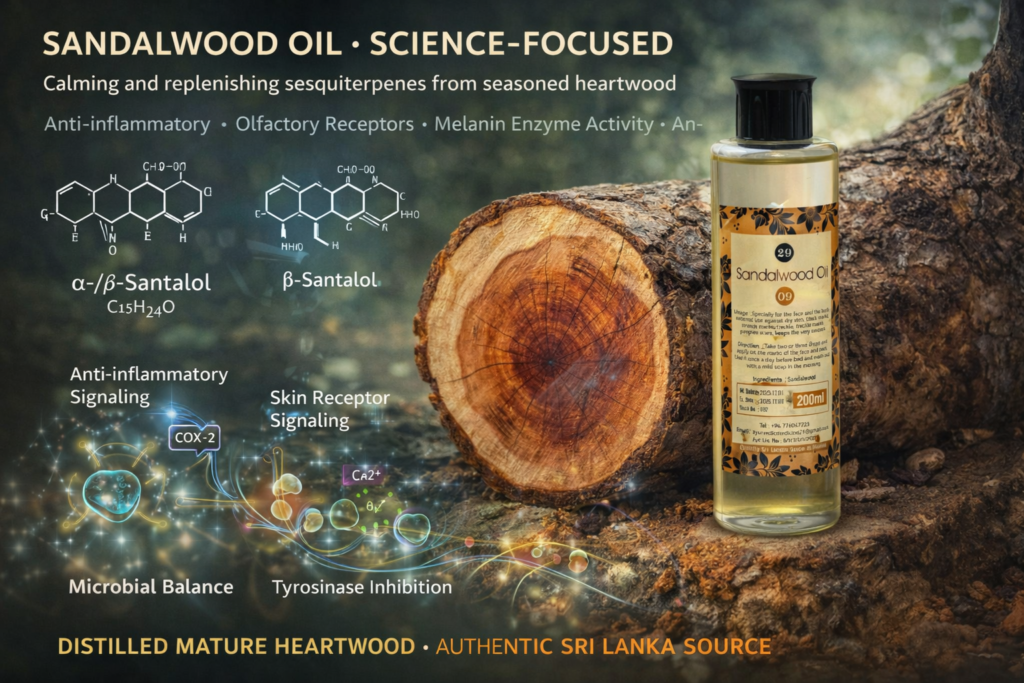
El aceite de sándalo es uno de los ingredientes tópicos de estilo ayurvédico más fáciles de defender científicamente porque Álbum de Santalum Cuenta con una sólida base bibliográfica en dermatología. Aun así, es importante mantener el tono adecuado: la evidencia respalda un tratamiento botánico tópico serio, no un aceite milagroso.
1) ¿Qué es lo más destacable del sándalo?
El aceite de sándalo es rico en sesquiterpenos como alfa-santalol y beta-santalol. Las publicaciones centradas en dermatología describen su relevancia como antiinflamatorio, antimicrobiano y calmante para la piel, y existe un interés genuino en su papel en afecciones como la piel irritada, la piel propensa al acné y las dermatosis inflamatorias.
2) Lo que debería seguir siendo conservador
La mayoría de los lectores no necesitan una clase de química altamente técnica para confiar en la página. Lo que importa más es una distinción clara entre beneficio dermatológico plausible y resultado de tratamiento comprobado. El sándalo cuenta con suficiente respaldo científico como para justificar un posicionamiento de alta gama basado en la evidencia, pero no lo suficiente como para justificar afirmaciones de que es una cura universal.
3) Por qué el abastecimiento y la calidad siguen siendo importantes
En el caso del sándalo, la identidad de la especie, la calidad de la materia prima y el perfil del aceite son factores cruciales. Por eso, el origen en Sri Lanka o el procesamiento tradicional pueden ser importantes, pero solo si se presentan con cuidado. El control de calidad y la autenticidad son argumentos de venta más sólidos que las afirmaciones románticas sobre el procesamiento, difíciles de verificar.
4) Conclusión
Este producto puede presentarse de manera creíble como un Aceite tópico tradicional de sándalo con relevancia dermatológica significativa.. Las afirmaciones más seguras y sólidas siguen estando relacionadas con el efecto calmante, el confort y el cuidado botánico específico para la piel.